Can you deduct mortgage points on your taxes?
Mortgage points are often tax deductible if you itemize. Points on a loan to buy your main home can be deducted in full the year you pay them if you meet every IRS test. Other points, like most refinance points, are deducted a little at a time over the life of the loan. These rules are for 2025 tax returns.
What are mortgage points?
Mortgage points are fees you pay to get a home loan, and the IRS treats them as prepaid interest. One point is 1% of the loan amount. So $4,000 in points on a $400,000 loan is one point. The IRS says points may also be called discount points, loan discount or loan origination fees.
Paying points lowers the interest rate on your loan. Learn how that works in our guide to buying down your Arizona interest rate. To see how points fit into the full cost of a loan, read How does a mortgage APR work and what does it mean?
Which points paid at closing can you deduct the year you pay them?
You can deduct points in full the year you pay them only if you meet all nine of these IRS tests:
- Your loan is secured by your main home, the home you live in most of the time.
- Paying points is a normal business practice in the area where the loan was made.
- The points were not more than the points normally charged in that area.
- You use the cash method of accounting. That means you count income in the year you get it and costs in the year you pay them. Most people use this method.
- The points were not paid in place of fees that are usually listed on their own, like appraisal, inspection, title or attorney fees, or property taxes.
- The money you paid at or before closing, plus any points the seller paid, was at least as much as the points. It can include your down payment or earnest money. You can't have borrowed it from your lender or mortgage broker.
- You used the loan to buy or build your main home.
- The points were figured as a percentage of the loan amount.
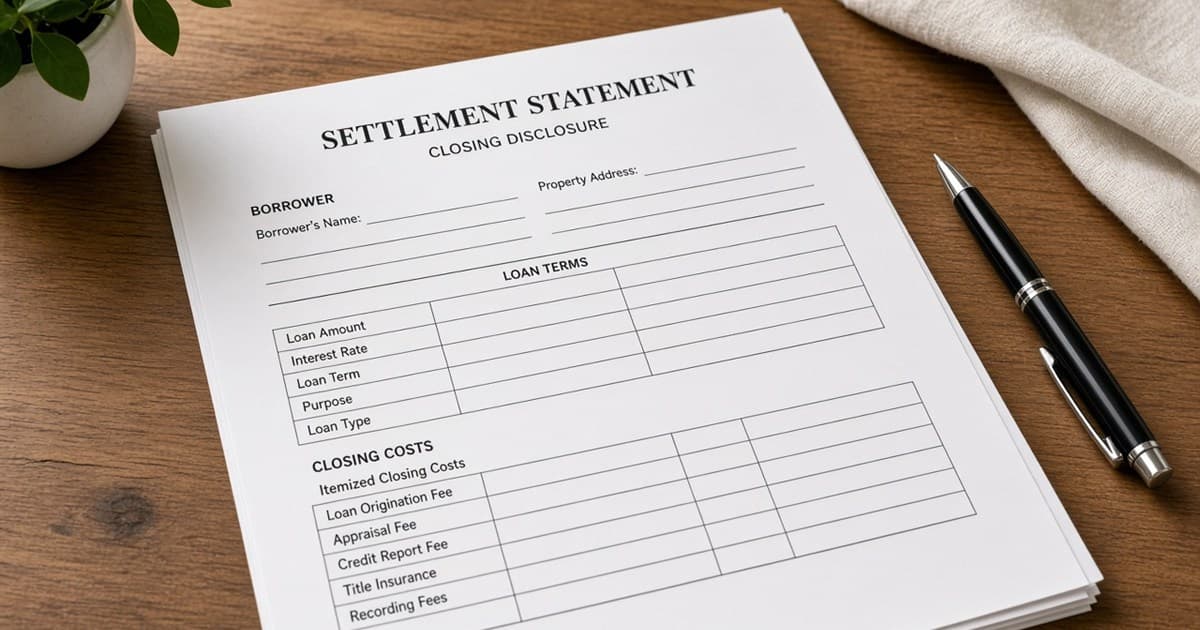
- The points are clearly shown as points on your settlement statement, the closing paper that lists your costs.
Example: you buy your main home with a $400,000 loan and pay $4,000 in points from your own money at closing. If you meet all nine tests and itemize, you may deduct the full $4,000 for that year. If you meet the tests, you can also choose to spread the points over the life of the loan instead.
Points on a loan to substantially improve your main home can also be deducted in full the year you pay them if tests 1 through 6 are met.
Is there a limit on deducting points?
There is a debt limit on deducting points, but it only matters if your home loan is larger than the limit. You can't fully deduct points on a mortgage that is above it. The limits are in IRS Publication 936.
For 2025 tax returns, you can deduct home mortgage interest on the first $750,000 of home loan debt. If you are married and file separately, it is $375,000. Debt taken on before December 16, 2017 has a higher limit. That limit is $1 million, or $500,000 if you are married and file separately.
Which closing costs are not points?
Fees for a specific service are not points, even when you pay them at closing. The IRS lists appraisal fees, VA funding fees, mortgage insurance premiums, notary fees, and the cost to prepare the mortgage note or deed of trust. You can't deduct these as points, either in the year you pay them or over the life of the loan.
See what else goes into your closing costs in our guide to Arizona closing costs.
Are refinance points deductible?
Refinance points are usually deductible, but over the life of the new loan, not all at once. This is true even when the loan is on your main home. To amortize a cost means to spread it out evenly over the life of the loan.
Example: you pay $4,000 in points on a $400,000, 30-year refinance. The IRS spreads points by the number of months in the loan, so a full year works out to about $133.
There is one exception. If you use part of the new loan to substantially improve your main home, and you meet the first six tests above, you can deduct that part of the points the year you pay them with your own money. If $100,000 of a $400,000 refinance goes to improvements, one-fourth of the points, $1,000 of $4,000, may be deducted that year. The other $3,000 is spread out.
If the loan ends early, like when you sell or pay it off, you can deduct the rest of the spread-out points that year. If you refinance with the same lender, you spread the rest over the new loan instead.
Are seller-paid points deductible?
Seller-paid points are deductible for the buyer, because the IRS treats them as if the buyer paid them. If all nine tests are met, you can deduct them the year they are paid. If not, you deduct them over the life of the loan.
There is a catch. You must lower your home's basis by the seller-paid points. Basis is what your home cost you for tax purposes, starting with the purchase price. Example: the seller pays $4,000 in points on your $400,000 loan. You may deduct the $4,000, and you subtract $4,000 from your home's basis.
The seller can't deduct those points as interest. For the seller, they are a selling expense.
Where do points show on my Closing Disclosure?
Look on page 2 of your Closing Disclosure, under Loan Costs, in section A, Origination Charges. Points are on the line that says % of Loan Amount (Points). The Closing Disclosure is the form your lender must give you three business days before closing. It lists your final loan terms and closing costs.
The IRS test asks that points be clearly shown as points on your settlement statement. They may be shown as paid from your money or the seller's. Keep a copy of your Closing Disclosure with your tax records. See the CFPB Closing Disclosure explainer for a walk-through of the form.
Do I have to itemize?
Yes, you must itemize deductions on Schedule A of Form 1040 to deduct mortgage points. To itemize means to list your deductions one by one. The other choice is the standard deduction, a set amount you can subtract without listing your costs. Schedule A is the tax form where you list itemized deductions.
Points shown on Form 1098 go on Schedule A, line 8a. Points that are not on Form 1098 go on line 8c. Form 1098 is the mortgage interest statement you should get by January 31 of the next year. If you bought your main home that year, it shows the points you paid, including points the seller paid. Look in box 6.
Points are one part of the mortgage interest deduction. For the bigger picture, read Is the mortgage interest tax deduction really a big deal?
Can you deduct mortgage points on your Arizona tax return?
Usually, yes, if you itemize on your Arizona return. That's because Arizona starts with the same itemized deductions as your federal Schedule A, which is where points and mortgage interest go. You can itemize in Arizona even if you take the standard deduction on your federal return.
To itemize, file Arizona Form 140, not Form 140A or 140EZ. Fill out a federal Schedule A first, even if you don't itemize with the IRS. Then put the total on Form 140, line 43. If you claim the federal mortgage interest credit (Form 8396), you'll also need Arizona's own Schedule A to make a change for it. If you're married and file separate Arizona returns, you both must itemize or both take the standard deduction.
This is general information, not tax advice. Talk to a tax professional. See the Arizona Form 140 instructions (2025).
What about a second home or rental?
Points on a loan for a second home can't be deducted in full the year you pay them. You can deduct them only over the life of the loan.
If you rent out your second home part of the year, it still counts as a home only if you use it yourself for more than 14 days, or more than 10% of the days it is rented, whichever is longer. If you don't, the IRS treats it as rental property, and its rules are in IRS Publication 527.
What else do people ask about mortgage points and taxes?
Are points paid at closing tax deductible?
Points paid at closing can be tax deductible. On a loan to buy your main home, they may be deducted in full that year if you itemize and meet every IRS test. If not, you usually deduct them over the life of the loan.
Is a loan origination fee the same as points?
A loan origination fee can count as points. The IRS says points may also be called loan origination fees or discount points. But a fee for a service, like an appraisal or a notary, is never points. To deduct points in full the year you pay them, they must be figured as a percentage of the loan amount.
Where will I see my deductible points after closing?
Look at Form 1098, the mortgage interest statement. You should get it by January 31 of the next year. If you bought your main home that year, box 6 shows the points paid, including points the seller paid.
What happens to spread-out points if I sell or pay off the loan early?
You can deduct the rest of them in the year the loan ends. But if you refinance with the same lender, you spread the rest over the new loan instead.
Can I itemize on my Arizona return if I take the federal standard deduction?
Yes. Arizona lets you itemize on your state return even if you take the standard deduction on your federal return. Fill out a federal Schedule A first. Then put the total on Arizona Form 140, line 43.
Can a mortgage broker help me plan for points?
Yes. A mortgage broker like Mortgage Brothers can show you loan options with and without points from several lenders. For the tax side, talk to a tax professional.
Where do these facts come from?
- IRS Topic No. 504, Home Mortgage Points (page last reviewed or updated September 24, 2026)
- IRS Publication 936 (2025), Home Mortgage Interest Deduction, for use in preparing 2025 returns
- Arizona Department of Revenue, 2025 Form 140 instructions (line 43) and 2025 Form 140 Schedule A instructions. Reviewed Oct 2026.
- Consumer Financial Protection Bureau: Closing Disclosure explainer
- IRS Instructions for Form 1098 (box 6, Points Paid on Purchase of Principal Residence)
- IRS Publication 527, Residential Rental Property
- Consumer Financial Protection Bureau: sample Closing Disclosure form (PDF)
Tax rules change. Every federal tax fact on this page comes from IRS Topic 504 and IRS Publication 936 (2025). The Arizona itemizing facts come from the Arizona Department of Revenue 2025 Form 140 and Form 140 Schedule A instructions. For changes after publication, the IRS points readers to IRS.gov/Pub936. Reviewed October 2026.